Consumer Data Shows Birds Are No Longer “Decorative Pets”
March 27, 2026
“Bird ownership is rapidly evolving from passive decoration to active companionship, as rising spending on health, enrichment, and gifts reflects a deeper emotional bond and a new generation of owners who treat birds as fully integrated family members rather than ornamental pets.”
Estimated Reading Time: 12 minutes┃Post by Aimee Grant
For much of modern pet-keeping history, birds were treated as ambient companions—present, appreciated, but rarely fully integrated into the emotional core of the household. A cage in the corner, a melodic chirp in the background, and a flash of color were often enough to define the human–bird relationship. Unlike dogs or cats, birds were typically seen as low-maintenance, low-interaction pets—more decorative than relational.
That perception is now changing in a measurable and profound way. Across global markets, consumer data shows that birds are increasingly being repositioned as emotionally significant companions. This transformation is not driven by a sudden surge in ownership alone, but by a shift in how owners behave, spend, and engage with their birds.
The global pet bird health market, for example, reached approximately $958.8 million in 2024 and is projected to grow at a compound annual growth rate of over 8% through 2030 . Growth at this level reflects rising per-pet spending and a stronger emotional commitment to bird care. In the United States, more than 6 million households own birds, and ownership is increasingly concentrated among younger generations .
A Generational Redefinition of Bird Ownership
One of the most significant drivers of this shift is generational change. Gen Z and Millennials are not simply entering the bird ownership space—they are reshaping it. Data shows that Gen Z alone represents a rapidly growing share of bird owners, with ownership increasing sharply in recent years.
Unlike previous generations, younger owners tend to reject passive pet ownership. They prioritize interaction, enrichment, and emotional connection. Birds are no longer confined to cages as background companions; they are increasingly integrated into daily routines, social media presence, and even personal identity.
This generational shift is critical because it introduces new expectations. Ownership now implies responsibility for mental stimulation, emotional well-being, and long-term health—not just survival. As a result, the role of birds within the household is evolving from peripheral presence to central companion.
The Emotional Economy of Bird Ownership
At the heart of this transformation lies a deeper emotional bond between humans and birds. Market data explicitly links increased spending to stronger attachment. Owners are no longer content with basic care; they are investing in experiences, enrichment, and quality of life.
This shift is reflected in purchasing behavior. Consumers are increasingly drawn to premium, specialized, and even eco-conscious products designed to enhance the well-being of their birds. Social media has further amplified this trend, serving as both an educational resource and a platform for sharing bird-related experiences. The result is a feedback loop: greater awareness leads to better care, which strengthens emotional bonds and drives further investment.
Rising Spending on Health and Gifts Reflects a Deepening Bond
Perhaps the clearest evidence that birds are no longer “decorative” lies in how much owners are willing to spend—and what they are spending on.
Consumer data shows that spending on bird health products such as vitamins, supplements, and medicines has increased by approximately 32% since 2018 . This marks a decisive shift from reactive care to preventive health management. Owners are no longer waiting for illness to occur; they are actively investing in long-term wellness.
From Basic Care to Preventive Wellness
Historically, bird care was often limited to seed-based diets and minimal veterinary attention. Today, that model is being replaced by a more sophisticated approach. Owners are seeking formulated diets, immune-support supplements, and specialized veterinary diagnostics. This mirrors trends previously observed in dog and cat ownership, suggesting that birds are following a similar path of humanization.
The implications are significant. Preventive care not only improves health outcomes but also extends lifespan and enhances quality of life. It reflects a mindset shift in which birds are valued not for their presence, but for their well-being.
Gift-Giving as a Signal of Emotional Integration
Equally revealing is the rise in gift-giving behavior. According to recent data, 76% of bird owners purchased gifts for their birds in 2024, up from 69% in 2018 . This is not a trivial statistic—it is a powerful indicator of emotional integration.
Gift-giving transforms the owner–pet relationship into something more reciprocal. It suggests celebration, recognition, and emotional investment. Owners are no longer simply caretakers; they are participants in a relationship that includes rituals such as birthdays, holidays, and everyday rewards.
Spending patterns reinforce this trend. The average amount spent per gift has increased by approximately 42%, driven largely by younger consumers . These gifts often include enrichment toys, interactive feeding systems, and habitat upgrades designed to stimulate cognitive and behavioral engagement.
Enrichment and the Rise of Interactive Care
Birds are uniquely suited to benefit from this shift because of their intelligence and social nature. Many species are capable of problem-solving, vocal mimicry, and strong social bonding. As awareness of these traits grows, so too does the demand for products and experiences that support them.
Enrichment is becoming a central pillar of bird care. Owners are investing in toys, training, and environmental enhancements that encourage natural behaviors. This represents a move away from static housing toward dynamic, interactive living environments.
A New Era of Bird Ownership Built on Interaction and Responsibility
The evolution of bird ownership is not limited to spending—it extends into daily behavior, lifestyle integration, and ethical awareness. Birds are increasingly seen as active participants in the household rather than passive inhabitants.
Modern bird ownership is defined by engagement. Owners are spending more time interacting with their birds through play, training, and social bonding. Out-of-cage time is becoming more common, and environments are being designed to encourage exploration and activity.
This shift reflects a growing recognition that birds require mental stimulation and social interaction to thrive. The cage, once the defining feature of bird ownership, is becoming less central—both physically and symbolically.
At the same time, access to information is transforming how birds are cared for. Bird-specific stores, online communities, and social media platforms are becoming key sources of knowledge. Approximately 25% of bird owners now rely on bird stores for care information, a significant increase over previous years .
This trend indicates that owners are seeking expertise and are willing to invest time in learning. Education is becoming as important as purchasing power in shaping the future of bird care.
Bird Ownership Spending Trends (2018–2030 Projection)
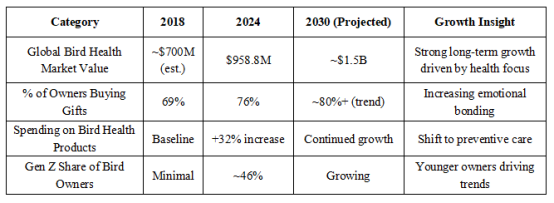
The transformation of bird ownership is both cultural and economic. Data shows rising spending on health, enrichment, and gifts. Behavior shows increased interaction, education, and emotional engagement. Together, these trends point to a clear conclusion: birds are no longer decorative pets. They are companions.
This shift has far-reaching implications. It challenges long-held assumptions about bird care, creates new opportunities for the pet industry, and raises the standard for responsible ownership. Most importantly, it reflects a deeper understanding of birds themselves—not as objects to be displayed, but as intelligent, social beings capable of forming meaningful relationships.
The cage, once a symbol of containment, is no longer the defining feature of bird ownership. The relationship is.
(This article is intended for informational and educational purposes only and does not constitute veterinary, financial, or professional advice. While the data presented is drawn from reputable industry sources, trends and statistics may evolve over time. Readers should consult qualified avian veterinarians and animal care professionals for advice tailored to their specific circumstances and bird species.)
About the Author
Aimee Grant is a seasoned pet industry journalist and avian welfare advocate with more than a decade of experience tracking trends in companion animal care and consumer behavior. Her reporting has appeared in Better Pet Care Monthly, The Companion Animal Journal, and Pet Market Insights, where she’s known for transforming complex market data into compelling stories that resonate with both industry leaders and everyday pet lovers.
References
[1] Grand View Research. (2025). Pet Bird Health Market Size & Trends Analysis Report.
[2] Petfood Industry. (2025). Gen Z drives bird, small animal ownership growth.
[3] American Pet Products Association (APPA). (2025). Bird, Small Animal & Horse Report.
[4] Pet Age. (2024). Bird, Small Animal & Horse Owner Insight Report.