
Why Some Birds Talk—and What Aspects of Animal Cognition Does This Reveal?
March 25, 2026
“The ability of parrots, songbirds, and certain other species to learn and mimic human speech isn’t just a novelty—it reflects rare vocal learning skills and complex cognitive adaptations that deepen our understanding of animal communication and brain evolution.”
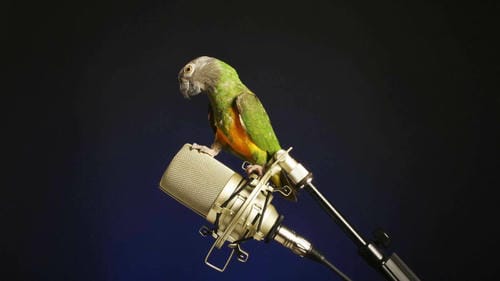
Estimated Reading Time: ~12–14 minutes┃Post by Elina Marrowe
The idea of a bird speaking human words has long fascinated scientists and pet owners alike. At first glance, it may seem like little more than novelty—an amusing trick or a quirky evolutionary accident. But when examined through the lens of biology and cognitive science, the ability of certain birds to “talk” becomes something far more significant. It reveals deep insights into how learning, communication, and intelligence evolve across species.
The Biological and Social Foundations of Talking Birds
Only a small group of animals possess the capacity known as vocal learning—the ability to acquire sounds through imitation rather than relying entirely on instinct. Among birds, this ability is found primarily in parrots, songbirds, and hummingbirds. What distinguishes these birds is not just their ability to copy sounds, but their capacity to refine, adapt, and use them within a social context. Parrots, in particular, stand out as the most advanced vocal mimics, capable of reproducing human speech with remarkable clarity due to specialized vocal organs and neural systems that support sound imitation.
Biologically, this ability begins with the syrinx, a unique vocal organ located where the trachea splits into the lungs. Unlike human vocal cords, the syrinx allows birds to control airflow with extreme precision, enabling them to produce a wide range of sounds, sometimes even multiple tones at once. This anatomical advantage is paired with a sophisticated neural architecture. Birds that can talk possess a specialized brain network often referred to as the “song system.” In parrots, this system is unusually complex, featuring a dual-layer structure that enhances their capacity for imitation and vocal control.
However, anatomy and neural wiring alone do not explain why birds talk. The key driver is social behavior. In the wild, parrots live in tightly knit flocks where vocalizations are essential for maintaining group cohesion, identifying individuals, and coordinating behavior. When these birds are placed in human environments, they redirect this social instinct toward people, treating them as members of their flock. As a result, they mimic human speech not randomly, but as a form of interaction and bonding.
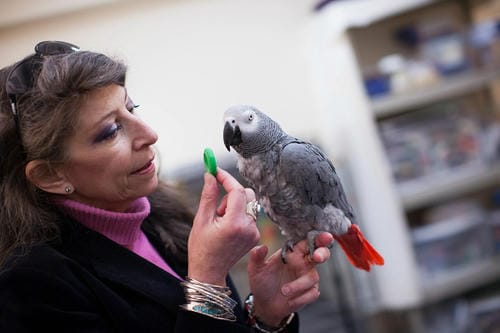
This perspective reframes bird “speech” as something more than mimicry. It is a socially motivated behavior rooted in evolutionary pressures that favor communication flexibility. The bird is not simply copying sounds; it is engaging in a learned communicative system shaped by its environment.
What Talking Birds Reveal About Cognition?
Understanding vs. Repetition
The most important question is not whether birds can imitate human speech, but whether they understand what they are saying. The answer lies on a spectrum, and exploring that spectrum reveals critical insights into animal cognition.
At the simplest level, birds can repeat sounds without attaching meaning to them. This type of mimicry is comparable to a recording device—it reproduces input without interpretation. However, extensive research shows that some birds, especially parrots, go significantly further. They can associate words with objects, actions, and even abstract categories, demonstrating that their communication is not purely mechanical.
One of the most well-documented examples is that of an African grey parrot trained to identify colors, shapes, and materials, and even demonstrate basic numerical understanding. This bird used words in context, not just repetition, indicating that it had formed associations between sounds and real-world referents. Such findings suggest that certain birds possess a level of symbolic cognition, the ability to use sounds as representations of objects or concepts.
Still, this does not mean birds have language in the human sense. Human language involves syntax, grammar, and the ability to generate infinitely novel sentences. Birds generally lack these features. Their communication is better described as contextual and associative, rather than generative. They use learned signals flexibly, but within limits.
Even within these limits, the implications are profound. Talking birds demonstrate that complex communication systems can emerge without the full structure of human language. This challenges the traditional assumption that language-like abilities are uniquely human and suggests instead that communication exists on a continuum.
Social Intelligence and Cognitive Complexity
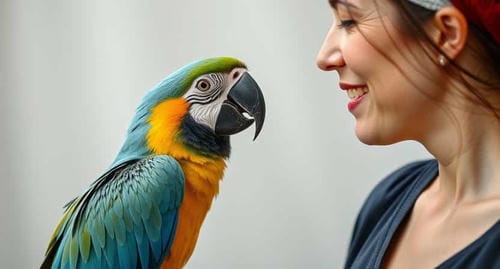
Another critical insight is the role of social intelligence in shaping communication. Birds that engage in vocal learning tend to live in socially complex environments. Their need to maintain relationships, coordinate group behavior, and adapt to changing social contexts drives the evolution of flexible communication systems. In parrots, vocal mimicry is not just a cognitive skill—it is a social tool.
This aligns with broader theories in cognitive science that link intelligence to social complexity. The more an organism depends on interaction with others, the more pressure there is to develop sophisticated ways of communicating and interpreting signals. Talking birds provide a clear example of this principle in action.
Additionally, the existence of advanced vocal learning in birds highlights the concept of convergent evolution. Bird brains are structurally very different from mammalian brains, yet they can produce similar cognitive outcomes. This indicates that intelligence is not tied to a specific biological blueprint. Instead, it can emerge through different neural architectures as long as the underlying functional requirements—such as memory, learning, and sensory-motor integration—are met.
Research also suggests that vocal learning is connected to other advanced cognitive traits, including problem-solving and pattern recognition. These interconnected abilities point to a broader cognitive system in which communication is just one component.
Perhaps most intriguingly, talking birds force us to reconsider what it means to “understand.” If a bird can use a word appropriately in context, request objects, or respond differently depending on the situation, does it truly matter whether it understands language in the same way humans do? Or does this represent a different, but equally valid, form of cognition?
Beyond Human-Centered Definitions of Intelligence
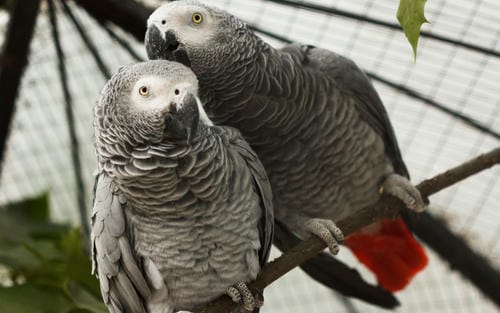
The study of talking birds ultimately leads to a broader reconsideration of how we define intelligence and communication. For much of scientific history, human language was seen as the pinnacle of cognitive evolution, a clear dividing line between humans and other animals. Talking birds blur that line.
They show that communication does not need grammar or syntax to be meaningful. Instead, it can emerge from the combination of vocal learning, social interaction, and environmental feedback. This suggests that language may not be a single, unified phenomenon, but rather a collection of related abilities that evolve in different ways across species.
Birds also highlight the importance of learning environments. Just as human children require exposure to language during critical developmental periods, young birds must hear and practice sounds to develop normal vocalizations. Without this input, their communication abilities can become impaired.
From an evolutionary perspective, the rarity of vocal learning underscores its complexity. Only a handful of animal groups possess this ability, suggesting that it requires a unique combination of anatomical, neural, and social factors. For many species, simpler forms of communication are sufficient for survival, making the evolution of vocal learning unnecessary.
Implications for Science and Pet Ownership
For humans, studying talking birds provides a valuable comparative model. It allows researchers to explore how communication systems develop, how brains process sound and meaning, and how social environments influence learning. In this sense, birds are not just mimics—they are models for understanding the origins of language itself.
For pet owners, this knowledge carries practical implications. A talking bird is not merely performing a trick; it is engaging in a form of social interaction. Its speech reflects its environment, its relationships, and its cognitive abilities. Recognizing this can lead to more meaningful and ethical ways of interacting with these animals.
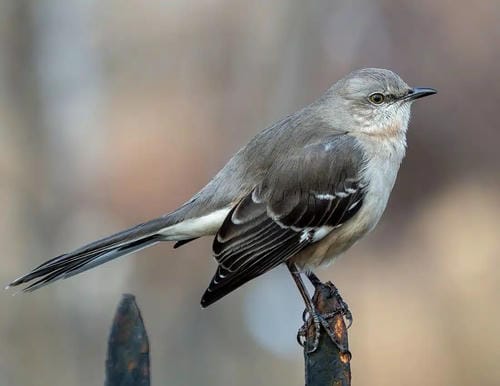
In the end, the phenomenon of talking birds reveals a simple but powerful truth: intelligence is not a single path leading to human-like language. It is a diverse landscape of abilities, shaped by evolution, environment, and social need. Birds, with their remarkable capacity for vocal learning, occupy a unique and illuminating place within that landscape.
(This article is intended for educational and informational purposes only and reflects current scientific understanding of avian cognition and communication. It should not be used as a substitute for professional veterinary or behavioral advice. Individual birds vary significantly in their cognitive abilities and responses to training or social interaction. For specific concerns about a pet bird’s behavior or communication, consult a qualified avian veterinarian or certified animal behavior specialist.)
Source
[1] https://www.sciencedirect.com/science/article/abs/pii/S0168159112001785
[2] https://iere.org/do-birds-understand-words
[3] https://www.sciencedaily.com/releases/2018/12/181206114829.htm
[4] https://sciencereader.com