How Smart Bird Feeders and AI Recognition Are Reshaping Bird Ownership?
March 26, 2026
“Smart bird feeders with integrated AI species recognition are transforming backyard birdwatching into an interactive, educational experience by identifying individual birds in real time, delivering data-rich insights, and deepening human connection with wildlife.”
Estimated Reading Time: 12–14 minutes┃Post by Sylvia Ridgeway
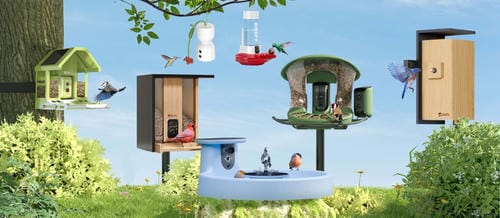
The quiet act of watching birds in one’s garden has long been associated with patience, stillness, and a certain level of expertise. Identifying species required field guides, experience, and often a fair amount of guesswork. Today, that paradigm is rapidly shifting. Smart bird feeders equipped with artificial intelligence (AI) recognition are transforming birdwatching into a dynamic, data-driven, and highly interactive experience.
These devices combine high-resolution cameras, wireless connectivity, and machine learning algorithms to do more than simply capture images. They interpret, organize, and even contextualize what they see. As a result, bird ownership—once defined by keeping birds in captivity—is being reimagined as a form of digital stewardship and ecological engagement.
This evolution reflects a broader trend: technology is not replacing nature but mediating our relationship with it in increasingly sophisticated ways.
The Rise of AI-Powered Bird Feeding
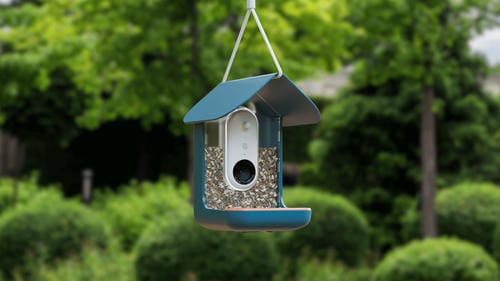
At its core, a smart bird feeder is an enhanced version of a traditional feeder, integrating a camera and app-based interface to monitor bird activity remotely. However, the addition of AI elevates the device from a passive recording tool to an intelligent system capable of understanding and categorizing wildlife interactions.
When a bird approaches the feeder, motion sensors activate the camera, capturing high-definition images or video. These images are then processed through machine learning models trained on vast datasets of bird species. The AI analyzes visual markers such as color patterns, body shape, and beak structure to identify the species in real time.
Some systems are capable of recognizing thousands—sometimes over 10,000—species globally, making them accessible tools for both beginners and experienced birders.
Beyond identification, these devices organize data into structured formats. Visits are logged, images are categorized, and users are presented with curated highlights rather than raw footage.
This shift from observation to interpretation is critical. It removes the barrier of expertise and opens birdwatching to a broader audience, including children, urban dwellers, and those new to wildlife engagement.
AI Recognition and the Transformation of Experience
What truly distinguishes smart bird feeders is not just their technical capability but their ability to reshape the user experience. Traditional birdwatching required presence; smart feeders enable participation from anywhere.
Through mobile applications, users receive real-time notifications when birds arrive, access live video streams, and review automatically generated highlights. This immediacy transforms birdwatching into an ongoing interaction rather than an occasional activity.
More importantly, AI introduces a layer of meaning. Instead of seeing “a bird,” users see “a goldfinch” or “a robin,” often accompanied by educational insights. Over time, this builds familiarity and recognition, fostering a deeper connection to local wildlife.
Emerging systems are beginning to go even further by distinguishing individual birds based on subtle visual differences and repeated visits. This capability allows users to track specific birds over time, effectively turning wild animals into recurring characters within a personal narrative of observation.
The emotional implications are significant. When a particular bird is recognized as a regular visitor, users often develop a sense of attachment similar to that experienced with traditional pets. The feeder becomes not just a device, but a medium for relationship-building.
Redefining Bird Ownership in the Digital Age
Perhaps the most profound impact of smart bird feeders lies in how they redefine the concept of ownership. Historically, owning a bird meant confinement—keeping it in a cage or aviary. Smart feeders introduce a different model, one that aligns more closely with contemporary values of animal welfare and environmental responsibility.
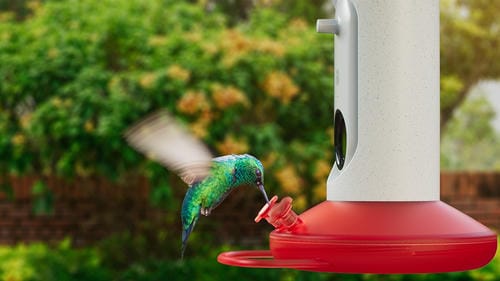
In this model, birds remain entirely wild. They are not controlled or confined, yet they are supported through consistent feeding and monitored through technology. The relationship becomes one of mutual interaction rather than possession.
AI plays a central role in enabling this shift. By identifying species, tracking visits, and organizing data, it creates a sense of familiarity and continuity without requiring physical ownership. Users can “know” their birds without ever restricting their freedom.
This aligns with broader societal trends toward ethical pet ownership and conservation. Rather than dominating nature, humans are increasingly seeking ways to coexist with it.
The Scientific and Educational Potential
Smart bird feeders are not merely consumer gadgets; they also function as decentralized data collection tools. Each feeder generates time-stamped records of bird visits, contributing to a growing body of observational data.
In aggregate, this data has significant potential for citizen science. Patterns in migration, feeding behavior, and species distribution can be analyzed on a scale that was previously difficult to achieve. Devices that automatically tag and archive bird visits create structured datasets that are far more useful than anecdotal observations.
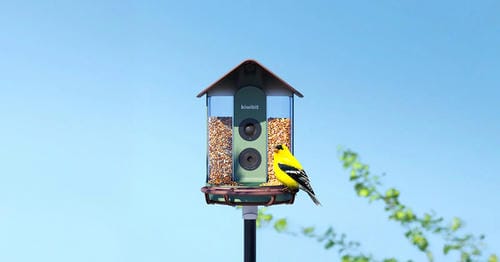
For education, the impact is equally profound. AI removes the steep learning curve traditionally associated with bird identification. Users learn passively, through repeated exposure and contextual information delivered by the app. This makes birdwatching more inclusive and engaging, particularly for younger audiences.
In classrooms and households alike, smart feeders serve as interactive learning tools, bridging the gap between digital technology and natural ecosystems.
Integration with the Smart Home Ecosystem
The functionality of smart bird feeders extends beyond standalone devices. They are increasingly integrated into broader smart home ecosystems, connecting with smartphones, cloud platforms, and even other IoT devices.
Users can receive alerts, share access with family members, and store footage in the cloud for later review. This connectivity transforms birdwatching into a shared experience, allowing multiple users to engage with the same feeder regardless of location.
Some devices also incorporate additional features such as solar power, ensuring continuous operation with minimal maintenance. This combination of sustainability and connectivity reflects the broader الاتجاه of modern consumer technology: convenience paired with environmental awareness.
Limitations and Ethical Considerations
Despite their advantages, smart bird feeders are not without challenges. AI accuracy, while impressive, is not infallible. Misidentifications can occur, particularly when lighting conditions are poor or when species share similar visual characteristics.
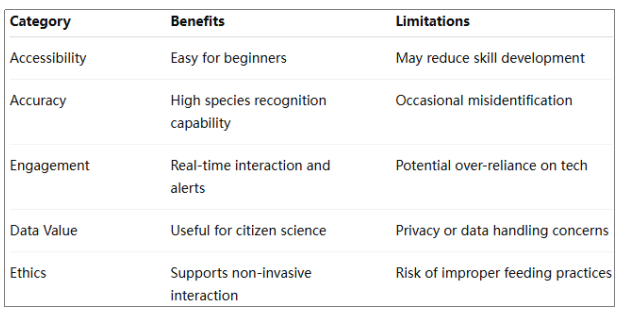
(Table 1-Benefits vs. Limitations of AI Bird Feeders)
There is also the issue of over-reliance on technology. Some traditional birdwatchers argue that automated identification reduces the skill and satisfaction associated with manual observation. While this concern is valid, it is worth noting that technology can also serve as a gateway, encouraging new participants to develop deeper interest over time.
Ethically, responsible use remains essential. Feeding practices must align with local wildlife guidelines, and devices should be positioned in ways that minimize disruption to natural behavior.
The Future of AI in Bird Interaction
The trajectory of smart bird feeder technology suggests continued innovation. One emerging development is multimodal recognition, where AI systems identify birds not only by sight but also by sound. This expands detection capabilities, particularly in low-visibility conditions.
Additionally, predictive analytics may soon enable feeders to anticipate bird visits based on historical data and environmental factors. This would transform feeders into proactive systems, capable of adapting to seasonal patterns and ecological changes.
As these technologies evolve, the boundary between observation and interaction will continue to blur. The bird feeder of the future may not just record visits but actively contribute to conservation efforts through data sharing and environmental monitoring.
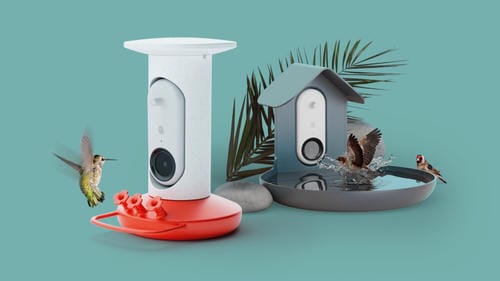
Smart bird feeders with AI recognition are redefining bird ownership by transforming it from a static, observational hobby into an interactive, data-driven experience. They bridge the gap between technology and nature, offering new ways to learn, connect, and coexist with wildlife.
By enabling species identification, organizing behavioral data, and fostering emotional connections, these devices create a new paradigm—one in which ownership is replaced by relationship, and observation becomes understanding.
As AI continues to advance, the simple act of feeding birds is evolving into something far more meaningful: a technologically mediated dialogue between humans and the natural world.
(This article is intended for informational purposes only and does not constitute professional veterinary, ecological, or technical advice. The capabilities of smart bird feeders, including AI recognition accuracy and feature availability, vary by manufacturer and may require subscriptions or software updates. Readers should follow local wildlife regulations and ethical feeding practices when interacting with wild birds. )
About the Author
Sylvia Ridgeway is a London-based pet technology journalist and former wildlife outreach specialist with over 12 years of experience in urban ecology and digital animal monitoring systems. She has worked with conservation initiatives across the UK and consulted on early-stage IoT pet device development, focusing on AI-assisted species recognition and behavioral tracking.
References
[1] Kiwibit. (2026). What is an AI-powered smart bird feeder?
[2] Bilantan. (2026). What is a smart bird feeder?
[3] BirdSense. (2026). AI-powered smart bird feeder overview.
[4] BirdBuddy Support. (2026). AI recognition best practices.