Elite Canine Athletes and the Science Behind Peak Agility Performance
March 23, 2026
Key Takeaways:
● Elite canine agility combines biomechanics, neurology, and behavioral science, requiring dogs to coordinate speed, power, and precision.
● Neurological skills like reaction time, decision-making, and impulse control are as important as physical conditioning for top performance.
● Muscle composition, especially fast-twitch fibers, enables short bursts of high-intensity activity essential for agility runs.
● High-drive temperament and strong handler-dog communication are crucial for focus, motivation, and seamless teamwork.
● Structured training, conditioning, and injury prevention strategies are key to building elite agility dogs and ensuring longevity in the sport.
Estimated Reading Time: 11–13 minutes┃Post by Evan Calder
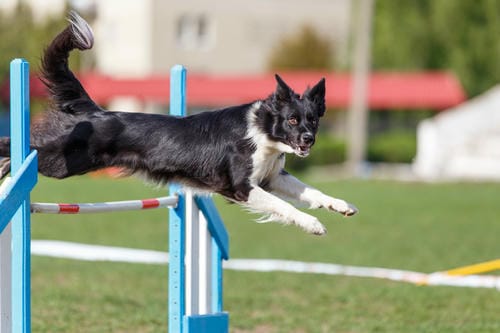
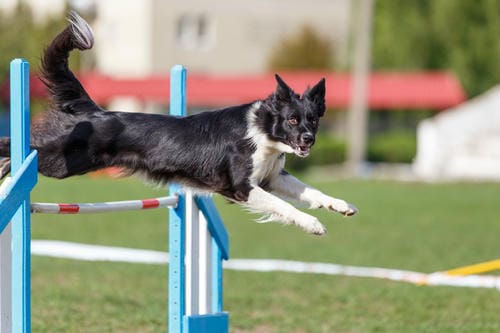
The sight of a dog flying over hurdles, weaving through poles, and sprinting across an obstacle course is nothing short of mesmerizing. Canine agility is often described as a sport, but at its highest levels, it is more accurate to call it a fusion of biomechanics, neurology, and behavioral science. Elite agility dogs are not just fast—they are finely tuned athletes operating at the limits of coordination, strength, and cognition.
Understanding what makes these dogs exceptional requires looking beyond training drills and into the physiological and psychological systems that drive performance. From muscle fiber recruitment to neural processing speed, the science behind canine agility reveals why only certain dogs—and certain training methodologies—reach elite status.
The Biomechanics of Speed, Power, and Precision
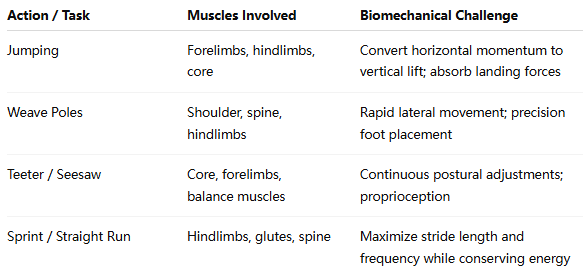
At the core of agility performance lies biomechanics—the study of how a dog’s body generates movement. Elite agility dogs must repeatedly accelerate, decelerate, pivot, and jump, often within fractions of a second. Each of these actions places unique demands on the musculoskeletal system.
Research using electromyography (EMG) has shown that agility tasks activate a dog’s forelimb muscles at levels far exceeding normal locomotion. In fact, peak muscle activation during agility obstacles can range from 1.7 to over 10 times greater than walking, particularly during jumping sequences. This indicates that agility is not merely a coordination exercise—it is a high-intensity, anaerobic activity comparable to sprinting sports in humans.
Jumping, in particular, is biomechanically demanding. Dogs must convert horizontal velocity into vertical lift while maintaining balance and preparing for landing. The forelimbs absorb substantial impact forces upon landing, which helps explain why shoulder injuries are relatively common among agility competitors .
Stride mechanics also play a critical role. Elite dogs optimize stride length and frequency to maintain speed between obstacles while positioning themselves precisely for the next maneuver. Even slight inefficiencies—such as an extra step before takeoff—can cost valuable time and disrupt rhythm.
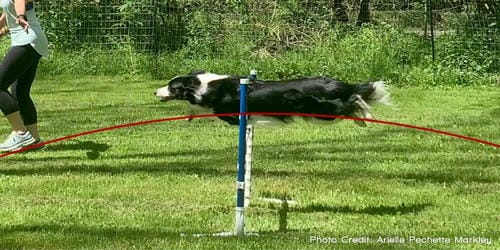
Another layer of complexity emerges when dogs encounter dynamic obstacles like the teeter (seesaw). Unlike static jumps, these require continuous postural adjustments and real-time balance corrections. Studies suggest that such obstacles demand heightened coordination and proprioception, forcing dogs to adapt their movement strategies mid-action.
In essence, agility performance is a continuous negotiation between power (force production), stability, and timing. The best canine athletes are those whose bodies can produce explosive power while maintaining precise control.
The Neurological Edge: Reaction Time and Decision-Making
While physical conditioning is essential, agility is equally a neurological challenge. Dogs must process handler cues, interpret course layouts, and execute complex motor sequences—all in real time.
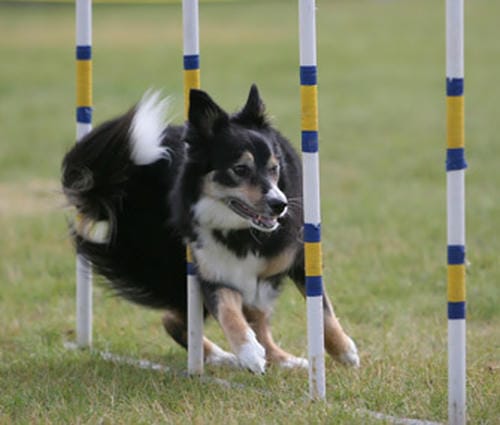
The canine brain excels at integrating sensory input with motor output. Visual cues (such as obstacle placement), auditory signals (handler commands), and proprioceptive feedback (body position) are processed simultaneously. This integration allows agility dogs to make split-second decisions, such as adjusting stride before a jump or choosing the correct entry point for weave poles.
Reaction time is a defining factor in elite performance. A delay of even a fraction of a second can result in a missed obstacle or a slower run. Training enhances neural efficiency by reinforcing pathways associated with specific movements and cues, effectively “hardwiring” responses through repetition.
Equally important is inhibitory control—the ability to resist incorrect actions. For example, a dog may see a nearby obstacle but must wait for the handler’s cue before committing. This level of impulse control requires advanced cognitive conditioning and distinguishes elite competitors from recreational participants.
Agility also places demands on spatial memory and anticipation. Experienced dogs learn to “read” course patterns, allowing them to predict upcoming obstacles based on prior sequences. This predictive capability reduces cognitive load and enables smoother, faster runs.
Muscle Composition and Conditioning
Not all dogs are built for agility, and much of this comes down to muscle composition. Like human athletes, dogs possess a mix of fast-twitch (Type II) and slow-twitch (Type I) muscle fibers.
Fast-twitch fibers are responsible for explosive power—rapid acceleration, jumping, and quick directional changes. These fibers fatigue quickly but generate high power output, making them essential for agility performance. Slow-twitch fibers, on the other hand, support endurance and sustained activity.
Elite agility dogs typically have a higher proportion of fast-twitch fibers, allowing them to perform short bursts of intense activity. This aligns with the nature of agility runs, which often last between 30 and 60 seconds and resemble high-intensity interval efforts.
Conditioning programs for these dogs focus on:
● Strength training to improve production and joint stability
● Core stability exercises to enhance balance and control
● Plyometric drills to increase power and reduce ground contact time
● Flexibility work to prevent injury and maintain range of motion
Importantly, conditioning is not limited to physical exercises. Recovery protocols—such as rest periods and controlled workloads—are critical to preventing overuse injuries, especially given the high levels of muscle activation observed during agility tasks .
The Psychology of High-Drive Dogs
Physical and neurological capabilities alone do not create an elite agility dog. Equally important is temperament—specifically, a trait known as “drive.”
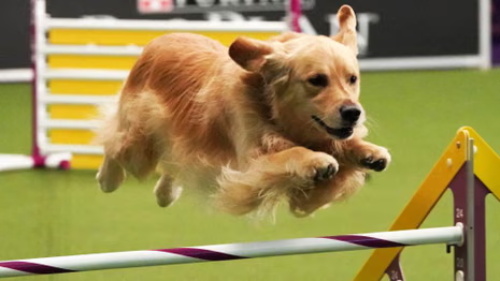
High-drive dogs exhibit intense motivation to work, chase, and respond to stimuli. This intrinsic motivation fuels performance, enabling dogs to maintain focus and energy throughout a run. However, it also presents challenges, as high-drive dogs can become overly aroused, leading to mistakes or loss of control.
Insights from the agility community highlight a common trade-off: dogs with the highest performance potential often require the most behavioral management. As one experienced handler noted, sport dogs tend to be “high energy and pushy,” requiring structured training to channel their intensity effectively .
Mental stimulation is another critical component. Agility functions as a form of problem-solving, where dogs must navigate obstacles and respond to cues dynamically. This cognitive engagement not only enhances performance but also contributes to overall mental well-being. Many handlers report increased focus, confidence, and adaptability in dogs that participate in agility training .
The bond between handler and dog is also central to success. Agility is a team sport, and effective communication—often through subtle cues—is essential. Elite teams develop a level of synchronization that allows them to operate almost intuitively.
Training Methodologies: Building an Elite Athlete
Developing an elite agility dog requires a systematic approach that integrates physical conditioning, skill acquisition, and behavioral training.
Early training often emphasizes “foundation skills,” including body awareness, balance, and responsiveness to cues. These foundational elements are critical for preventing injuries and ensuring efficient movement patterns later on.
As training progresses, dogs are introduced to obstacles in a controlled manner. The focus is not on speed initially but on accuracy and confidence. Only once a dog demonstrates consistent performance are speed and complexity increased.
Modern training methodologies increasingly incorporate principles from sports science, such as periodization. This involves structuring training cycles to balance workload and recovery, optimizing performance while minimizing injury risk.
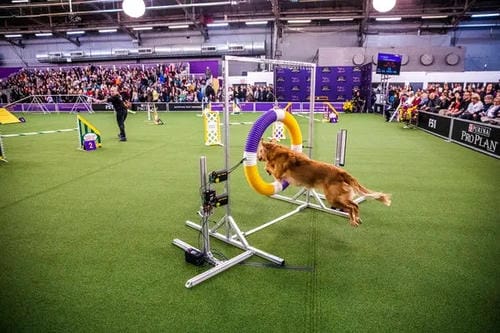
Handlers also use reinforcement strategies—such as rewards and play—to maintain motivation. Given the high mental demands of agility, keeping training engaging is essential for sustained performance.
Injury Risks and Longevity
Agility is physically demanding, and injuries are relatively common rather than exceptional. Research suggests that about one-third of agility dogs experience a performance-related injury . Most cases involve soft tissue damage, with the shoulder, forelimbs, and iliopsoas muscle being the most frequently affected areas .
These injuries are largely driven by repetitive stress—high-speed turns, jumping, and impact forces—rather than single traumatic events. Factors such as surface type, obstacle design, and training intensity can further influence risk.
Longevity in the sport depends on proactive management: structured conditioning, gradual workload increases, and sufficient recovery. Dogs that maintain long, successful careers are typically those trained with equal emphasis on performance and injury prevention, ensuring durability alongside speed.
What appears effortless on the course is, in reality, the culmination of complex physiological processes and countless hours of training. By understanding the science behind these canine athletes, we gain not only a deeper appreciation for their abilities but also valuable insights into how to train, care for, and support them.
Agility is more than a sport—it is a testament to the extraordinary capabilities of dogs and the power of the human-animal bond.
(This article is intended for informational and educational purposes only and does not constitute veterinary or professional training advice. Always consult a licensed veterinarian or certified canine rehabilitation professional before beginning any new training or conditioning program, particularly for high-impact sports such as agility.)
About the Author
Evan Calder is a canine performance specialist and veterinary science writer with over a decade of experience covering working dogs, sports physiology, and animal behavior. With a background in comparative biomechanics and hands-on experience training competitive agility dogs, Calder bridges the gap between academic research and practical application. Their work has been featured in leading pet and veterinary publications, where they focus on translating complex science into actionable insights for dedicated dog owners and trainers.
References
[1] Cullen, K. L., Dickey, J. P., Brown, S. H. M., Nykamp, S. G., Bent, L. R., Thomason, J. J., & Moens, N. M. M. (2017). The magnitude of muscular activation of four canine forelimb muscles in dogs performing two agility-specific tasks. BMC Veterinary Research, 13(1), 68.
[2] Markley, A. P., Wood, M. K., Shoben, A. B., & Olson, R. A. (2024). Variability in performance of agility dogs navigating a dynamic obstacle. Frontiers in Veterinary Science.