Hamsters vs. Guinea Pigs: Ownership Data Reveals Who Chose Which Pet
March 24, 2026
Key Takeaways:
● Hamsters are easier and require less time, so they suit busy or small-space owners.
● Guinea pigs need more space and interaction, making them better for committed owners or families.
● The choice depends on lifestyle: hamsters offer convenience, while guinea pigs offer more social and emotional connection.
Estimated Reading Time: 12–14 minutes┃Post by Lena Hartwell
The question of whether people prefer hamsters or guinea pigs has long been framed as a matter of taste. Yet when examined through the lens of ownership data, demographic behavior, and welfare research, the comparison becomes far more analytical. Rather than a simple popularity contest, hamster and guinea pig ownership reflects deeper patterns in how individuals allocate time, space, money, and emotional investment.
Across the United Kingdom, both species occupy a relatively small but stable share of total pet ownership. Large-scale datasets show that guinea pig ownership consistently exceeds hamster ownership, though both remain niche compared to cats and dogs. Statista survey frameworks confirm that both categories have maintained steady ownership rates over more than a decade, with no dramatic spikes or declines, indicating a mature and stable segment of the pet market .
Population estimates reinforce this equilibrium. Both hamsters and guinea pigs exist in the millions across UK households, signaling sustained demand despite their classification as small pets . However, similar population scale does not imply similar ownership patterns. Instead, the data reveals clear segmentation: different types of people are choosing different animals for fundamentally different reasons.
Behavioral Drivers Behind Pet Choice
The divergence between hamster and guinea pig ownership becomes clearer when viewed through behavioral economics. Hamsters tend to be selected by individuals seeking a low-friction entry into pet ownership. Their small size, solitary nature, and shorter lifespan reduce perceived long-term commitment. These traits align with practical constraints such as limited living space, irregular schedules, or financial caution. In this context, hamster ownership reflects optimization for efficiency, where convenience and flexibility are prioritized.
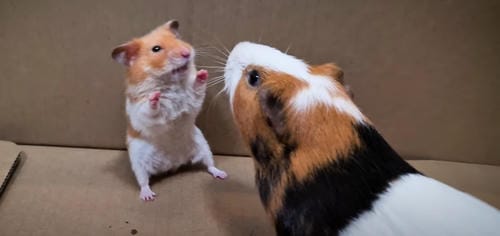
Guinea pigs, in contrast, require a fundamentally different ownership model. They are social animals that ideally live in pairs or groups, demand larger enclosures, and require consistent interaction and dietary management. Their care structure introduces complexity, making them less suitable for impulse ownership. Instead, choosing a guinea pig reflects a willingness to engage in a more involved and relational form of pet ownership.
Time availability plays a decisive role in this split. Hamsters, being nocturnal and relatively independent, do not demand sustained daily engagement. Guinea pigs, active during the day and highly social, require consistent interaction. Ownership decisions therefore become a form of time allocation, where individuals select pets based on how much daily engagement they can realistically provide.
Demographics and Lifestyle Segmentation
Ownership patterns align closely with demographic variables, particularly age, housing, and stability. Younger individuals, students, and first-time pet owners are more likely to choose hamsters. Their living environments—often smaller, temporary, or shared—favor animals that can be accommodated with minimal disruption. Guinea pig ownership is more common among families and individuals with stable housing, where space and long-term planning are less constrained.
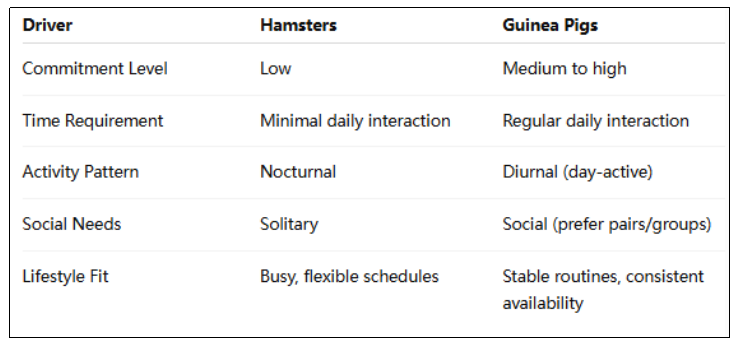
(Table 1- A Comparison between Hamsters vs. Guinea Pigs)
Housing plays a particularly important role. Urban living environments, especially flats and rented accommodations, naturally limit the feasibility of larger enclosures and multi-animal setups. Hamsters fit neatly into these constraints, while guinea pigs require more deliberate spatial planning. This creates a structural filter in which lifestyle conditions pre-select the type of pet an individual is likely to own.
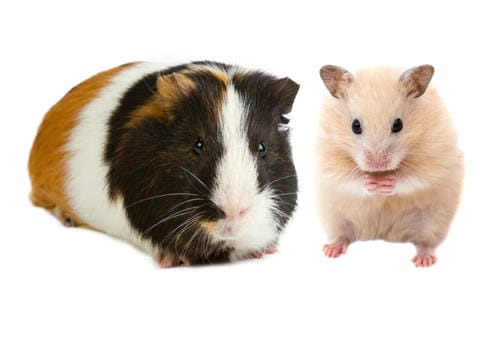
Financial considerations reinforce these patterns. While hamsters are typically perceived as low-cost pets, this perception is largely tied to their initial setup requirements. Guinea pigs involve higher upfront investment due to the need for larger enclosures and the recommendation to keep them in pairs. Ongoing costs also differ significantly. Guinea pigs require continuous supplies of hay, fresh vegetables, and bedding, as well as access to specialized veterinary care. UK-based cost breakdowns show that even acquisition costs can vary depending on whether guinea pigs are adopted singly or in bonded pairs, with pricing structures reflecting their social needs .
Despite higher costs, guinea pig ownership remains stable. This suggests that financial expense is not the primary decision driver. Instead, owners appear to evaluate pets based on the balance between cost and emotional engagement.
Emotional ROI and Human–Animal Interaction
The concept of emotional return on investment provides a useful framework for understanding ownership differences. Guinea pigs, with their vocalizations, social behaviors, and responsiveness, offer a more interactive experience. They respond to human presence, develop routines, and exhibit distinct personalities, creating a feedback loop of engagement.
Hamsters, while engaging in their own way, offer a more observational relationship. Their nocturnal activity patterns and solitary behavior limit opportunities for interaction. As a result, the emotional experience of hamster ownership is often quieter and less socially reciprocal.

Ownership data implicitly reflects these differences. Individuals seeking companionship and daily interaction gravitate toward guinea pigs, while those prioritizing simplicity and independence choose hamsters. The decision is less about the animal itself and more about the type of relationship the owner wants to maintain.
Cultural Perception and Misconceptions
Cultural narratives significantly shape pet ownership decisions. Hamsters are frequently marketed as beginner pets, reinforcing their association with ease and accessibility. However, this framing can be misleading. In practice, hamsters have specific environmental and behavioral needs that are often underestimated, leading to mismatches between expectation and reality.
Guinea pigs, on the other hand, are often underrepresented in mainstream pet marketing despite offering a richer interactive experience. This imbalance contributes to a pattern in which hamsters are more likely to be impulse purchases, while guinea pigs are more often deliberate choices.
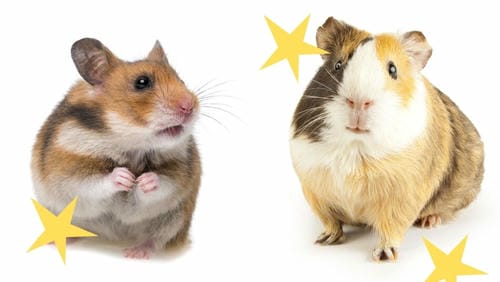
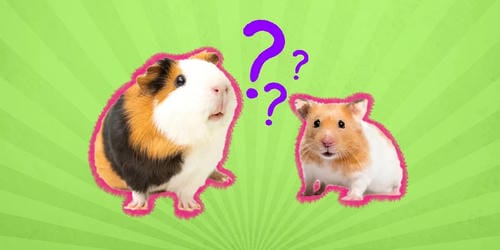
Community discussions reveal persistent misconceptions that influence ownership. For example, many first-time observers are surprised by the size difference between guinea pigs and hamsters, highlighting gaps in public understanding. One Reddit user noted that people are often “shocked” when seeing fully grown guinea pigs compared to expectations . Another discussion highlights how frequently guinea pigs are mistaken for hamsters entirely, underscoring a broader lack of species awareness .
These misconceptions have real consequences. When expectations do not align with reality, the likelihood of dissatisfaction, neglect, or rehoming increases.
Welfare Outcomes and Real-World Consequences
Ownership decisions are not purely theoretical; they have direct implications for animal welfare. Guinea pigs, due to their social nature, are particularly vulnerable when kept alone or in inadequate environments. Cases of abandonment in the UK have highlighted how misunderstandings about care requirements, combined with financial pressure, can lead to poor outcomes. Reports of abandoned guinea pigs emphasize their need for companionship and the emotional distress caused by isolation .
Hamsters face different welfare challenges. Their reputation as low-maintenance pets often results in inadequate housing, insufficient enrichment, and limited awareness of their behavioral needs. While less visible than abandonment cases, these issues reflect a similar mismatch between perception and reality.
These welfare patterns reinforce a key insight: pet ownership decisions are often made with incomplete information. Improving access to accurate, data-driven guidance could significantly reduce these mismatches.
The comparison between hamsters and guinea pigs ultimately reveals more about human behavior than about the animals themselves. Ownership data does not point to a clear winner; instead, it highlights how different pets align with different lifestyles. Hamsters represent efficiency, flexibility, and low commitment. Guinea pigs represent interaction, stability, and emotional engagement.
This distinction explains why both species maintain stable ownership levels despite differing costs and care requirements. Each fulfills a specific role within the broader ecosystem of pet ownership, catering to distinct psychological and practical needs.
(This article is intended for informational purposes only and does not constitute veterinary, legal, or professional advice. Ownership statistics are based on survey estimates and may vary depending on methodology and reporting year. Readers should consult qualified veterinarians or certified animal care professionals before acquiring or caring for any pet. The author and publisher are not responsible for decisions made based on the information provided.)
References
[1] Shahbandeh, M. (2025). Guinea pig ownership in the United Kingdom (UK) 2011–2024. Statista.
[2] Fox, A., & Neville, V. (2024). Burrowing for answers: Investigating Syrian hamster welfare through owner surveys. Veterinary Record.
[3] Blue Cross. (2024). The Big Pet Census: Small pet ownership insights.
[4] Hanford, M. (2025). The real cost of owning guinea pigs in the UK. GuineaPiggles.
[5] Royal Society for the Prevention of Cruelty to Animals (RSPCA). (2024). Small pet welfare and abandonment trends in the UK.
Enjoyed this post? Take a moment to explore more pet care tips, stories, and guides!