Why Noise Levels Are Becoming a Key Factor in Pet Selection?
March 24, 2026
In this Article:
● Noise levels are becoming an important factor when choosing a pet, especially for people living in apartments or working from home.
● Quiet pets, like small mammals, reptiles, and fish, are preferred because they cause minimal disruption.
● Technology and training tools are helping owners manage pet noise without harming the animal.
● Matching a pet’s natural behavior with the owner’s lifestyle leads to happier pets and more peaceful homes.

Estimated Reading Time: 9–11 minutes┃Post by Maris Calderon
In recent years, pet ownership has undergone a subtle but meaningful transformation. While traditional factors such as size, temperament, and maintenance requirements still matter, an increasingly influential consideration has entered the decision-making process: noise. From urban apartments to remote work setups, the modern lifestyle is reshaping what people expect from their animal companions. The result is the emergence of what many are calling the “quiet pet” trend—a growing preference for animals that fit seamlessly into low-noise, low-disruption environments.
This shift is not merely anecdotal. It reflects broader societal changes in housing patterns, work habits, and even mental health awareness. As more individuals prioritize calm, controlled living spaces, pets that align with these values are gaining popularity. But what exactly defines a “quiet pet,” and why is this trend accelerating now? More importantly, what does it mean for animal welfare, pet industries, and future ownership patterns?
The Rise of Noise Awareness in Modern Living
Noise, once considered a minor inconvenience in pet ownership, has become a central concern for many households. This is largely due to changes in how people live and work. Urbanization has led to smaller living spaces, thinner walls, and closer proximity to neighbors. In cities especially, excessive noise from pets—whether barking dogs or vocal birds—can lead to complaints, fines, or even eviction in extreme cases.
At the same time, the global shift toward remote and hybrid work has made people more sensitive to their home environment. Video calls, virtual meetings, and concentrated solo work require a level of quiet that was previously unnecessary during the workday. A barking dog or a loud parrot is no longer just a background annoyance—it can directly interfere with professional responsibilities.
Additionally, there is a growing awareness of the psychological impact of noise. Studies in environmental psychology suggest that chronic noise exposure can contribute to stress, reduced concentration, and even sleep disturbances. As people become more intentional about creating peaceful living spaces, their choice of pets reflects this priority.

The convergence of these factors has elevated noise from a secondary consideration to a primary filter in pet selection.
What Defines a “Quiet Pet”?
The term “quiet pet” does not necessarily mean silent. Rather, it refers to animals whose natural behaviors produce minimal or manageable noise levels. This can vary widely depending on the species, breed, and individual temperament.
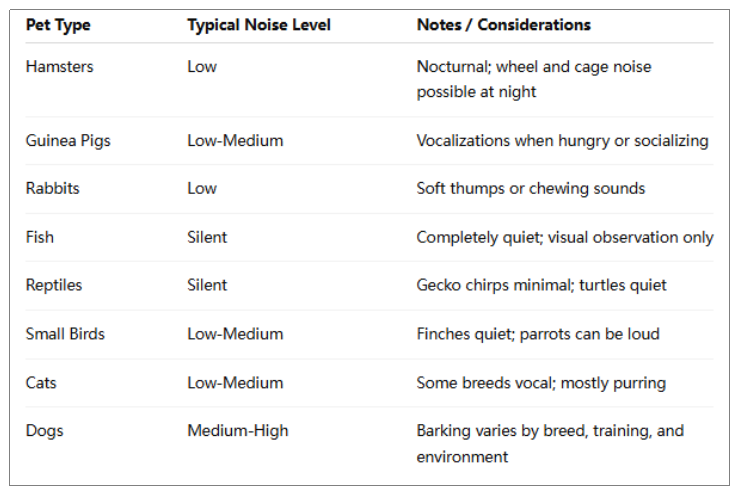
Small mammals such as hamsters, guinea pigs, and rabbits are often perceived as quiet because they rarely vocalize loudly. However, even these animals can produce noise through activities like wheel running or cage interaction, particularly at night. Reptiles and amphibians, including geckos and turtles, are among the quietest options, as they rely more on visual and chemical communication than sound.
Fish, of course, are the quintessential silent pets, though their care requirements can be more complex than many beginners expect. Birds, on the other hand, present a nuanced case. While some species like finches are relatively quiet, others such as parrots can be extremely vocal and are often unsuitable for noise-sensitive environments.
Dogs and cats occupy a middle ground. While cats are generally quieter, some breeds are notably vocal. Similarly, certain dog breeds are known for their calm and low-barking tendencies, while others are naturally more expressive. Training and environment also play significant roles in determining how noisy a pet becomes.
Ultimately, a “quiet pet” is defined not just by species but by a combination of biological traits, environmental conditions, and owner management.
Why the Trend Is Accelerating?
The quiet pet trend is gaining momentum due to several intersecting drivers, each reinforcing the importance of noise control in daily life.
One of the most significant factors is housing policy. Many rental agreements now include strict clauses regarding noise disturbances, and pet-related complaints are among the most common issues reported by landlords. Prospective pet owners are increasingly aware that choosing a noisy animal could jeopardize their housing stability.
Another driver is demographic change. Younger generations, particularly millennials and Gen Z, are more likely to live in apartments and prioritize lifestyle compatibility when selecting pets. They are also more likely to conduct extensive online research before adoption, where noise level is often highlighted as a key attribute.
Technology has also played a role. With the proliferation of smart home devices and noise-monitoring tools, people are more conscious of their acoustic environment than ever before. Apps that measure decibel levels or track pet activity can reveal patterns that might have gone unnoticed in the past.
Social media further amplifies the trend. Content featuring calm, low-maintenance pets often performs well, reinforcing the desirability of animals that integrate smoothly into daily routines. Conversely, viral videos of noisy or disruptive pets can serve as cautionary tales, influencing public perception.
The Impact on Pet Adoption and Industry Trends
As noise becomes a deciding factor, its influence is extending beyond individual choices to shape broader adoption patterns and industry practices.

Animal shelters and rescue organizations are beginning to recognize the importance of noise-related information in their listings. Descriptions now frequently include notes on vocalization tendencies, activity levels, and suitability for apartment living. This helps match pets with owners more effectively, reducing the likelihood of returns due to mismatched expectations.
Breeders are also responding to demand by emphasizing quieter traits in certain lines. While this raises ethical considerations—particularly around selective breeding—it reflects a market-driven shift toward pets that align with contemporary lifestyles.
The pet product industry is adapting as well. There is growing demand for items designed to minimize noise, such as silent exercise wheels, sound-dampening enclosures, and calming aids for anxious animals. Training services that focus on reducing excessive barking or vocalization are also seeing increased interest.
However, this trend is not without its challenges. There is a risk that animals with naturally higher noise levels may become less adoptable, leading to longer shelter stays or increased abandonment rates. This underscores the need for balanced education that emphasizes responsible ownership rather than purely convenience-based selection.
Advancements in technology are opening new possibilities for managing pet noise more effectively and humanely. Smart training devices, for instance, can detect excessive barking or vocalization and provide gentle, automated feedback to encourage calmer behavior without causing stress. Similarly, environmental innovations—such as sound-dampening enclosures, interactive toys that engage pets quietly, and smart home systems that monitor acoustic activity—allow owners to maintain a peaceful household without restricting natural behaviors. Even wearable tech for pets, equipped with noise sensors or activity trackers, can help identify patterns that trigger vocalization, enabling owners to intervene proactively. Together, these technological tools not only make pet ownership more compatible with modern lifestyles but also support the well-being of animals by addressing noise in a precise and compassionate way.
The Future of Pet Selection in a Noise-Conscious World
Looking ahead, the emphasis on noise levels is likely to remain a significant factor in pet selection, particularly as urbanization and remote work continue to shape daily life. However, the trend may evolve in more sophisticated ways.
Advancements in technology are opening new possibilities for managing pet noise more effectively and humanely. Smart training devices, for instance, can detect excessive barking or vocalization and provide gentle, automated feedback to encourage calmer behavior without causing stress. Similarly, environmental innovations—such as sound-dampening enclosures, interactive toys that engage pets quietly, and smart home systems that monitor acoustic activity—allow owners to maintain a peaceful household without restricting natural behaviors.

Even wearable tech for pets, equipped with noise sensors or activity trackers, can help identify patterns that trigger vocalization, enabling owners to intervene proactively. Together, these technological tools not only make pet ownership more compatible with modern lifestyles but also support the well-being of animals by addressing noise in a precise and compassionate way.
The future of pet ownership may see a significant shift toward personalized pet matching systems, leveraging data to ensure better compatibility between animals and their owners. By analyzing factors such as lifestyle, living space, daily routines, and individual preferences, these systems could recommend pets that align closely with an adopter’s needs, including critical considerations like noise tolerance. For example, an apartment dweller who works from home could be paired with a low-vocalization dog or a quiet small mammal, while a more active household might receive suggestions for pets whose energy levels and vocal tendencies match the family dynamic. Such data-driven matching not only reduces the likelihood of mismatches and subsequent rehoming but also enhances the overall well-being of both the pet and owner, fostering long-term, harmonious relationships built on realistic expectations and mutual satisfaction.
The quiet pet trend, in this sense, can be seen as part of a larger movement toward intentional pet ownership—one that prioritizes harmony between humans and animals in an increasingly complex world.
(This article is for informational purposes only and is not a substitute for professional veterinary or behavioral advice. Pets may vary in behavior and noise levels. Consult a qualified veterinarian or animal specialist before making pet-related decisions. The author and publisher are not responsible for outcomes based on this content.)
About the Author
Post by Maris Calderon. She is a UK-based pet behavior writer and former small-animal care consultant with over a decade of experience in companion animal welfare. Having worked with urban rescue centers and veterinary clinics, she specializes in matching pets to modern lifestyles, with a focus on behavior, environment, and human–animal compatibility. Her work has been featured in leading pet care publications, where she explores emerging trends such as low-noise pet ownership and the evolving dynamics of domestic companionship.
Source
[1] https://www.avma.org
[2] https://www.humaneworld.org
[3] https://www.petmd.com