How Pets Cope with Disasters Better Than Humans?
March 23, 2026
Key Takeaways:
● Pets can sense subtle environmental changes, like shifts in vibration or air pressure, that humans often miss before disasters strike.
● Dogs and cats sometimes show restlessness or alertness before storms or earthquakes because of their sharper senses.
● Animals don’t worry about future threats like humans do, which helps them stay calmer and react quickly in emergencies.
● Strong bonds between pets and owners can help reduce stress for people during and after disasters. Including pets in disaster plans improves safety, because owners are more likely to evacuate and stay safe when their animals are accounted for.
Estimated Reading Time: 12–15 minutes┃Post By Lila Hartwell
Disasters, whether natural or human-made, are moments when the fragility of life becomes starkly visible. Hurricanes, earthquakes, wildfires, and floods test human ingenuity, preparedness, and emotional resilience. Yet, amid the chaos, pets often exhibit a remarkable ability to adapt and survive. Dogs, cats, and other domesticated animals frequently respond to emergencies with instinctual acuity and emotional resilience that can surpass human reactions. Understanding these behaviors not only sheds light on animal intelligence but also provides valuable lessons for human disaster preparedness.
Instinctual Awareness and Early Detection
Animals’ heightened sensory perception is a key factor in their superior disaster coping. Dogs, for example, have an olfactory system vastly more sensitive than humans’, enabling them to detect subtle environmental shifts such as changes in barometric pressure, chemical emissions, or human stress hormones. This sensitivity allows them to react even before humans recognize danger. Similarly, cats possess exceptional auditory acuity and vestibular senses, enabling them to detect vibrations or sounds preceding earthquakes or storms.
Such acute perception often results in preemptive behaviors: agitation, hiding, or increased alertness before a disaster occurs. Anecdotal reports abound of dogs refusing to enter the house before storms or cats seeking higher ground hours before seismic events. These behaviors illustrate that pets often function as natural early warning systems, relying on sensory information humans may overlook.
Adaptability in Chaotic Environments
Disasters often create chaotic, unpredictable scenarios where structured planning may falter. Humans rely heavily on cognitive strategies and preplanned protocols, which, while effective in theory, can become cumbersome in unexpected situations. Pets, however, rely on instinct, flexibility, and immediate situational assessment.
Dogs, for instance, can navigate through rubble, find safe spaces, or locate other pack members without prior training, demonstrating problem-solving abilities that emerge in real-time. Cats often climb or squeeze into protective spaces with remarkable ingenuity, avoiding hazards that humans might not anticipate. These adaptive behaviors are evolutionary responses; animals that efficiently navigated sudden environmental changes had better survival outcomes, a trait still evident in domestic pets today.

Emotional Resilience and Stress Recovery
One of the most striking differences between pets and humans during disasters is their emotional response. Humans tend to experience prolonged anxiety, fear, and cognitive overload, which can impair decision-making. Pets, in contrast, process stress more efficiently through fight-or-flight responses.
Research shows that animals experience stress but generally recover quickly, as they lack the capacity for prolonged rumination or anticipation of future threats that humans often experience. Dogs often shift focus from environmental stressors to immediate safety measures, such as seeking shelter or ensuring their human companions are nearby. Cats, while more solitary, display remarkable composure, quickly adapting to new hiding spaces or escape routes. This resilience allows pets to maintain functionality even under extreme stress.
The Role of Social Bonding in Disaster Response
Pets’ responses are also heavily influenced by social bonds, both with humans and other animals. Animals can perceive human emotional states and adjust behavior accordingly. Dogs, in particular, often mirror the calmness or anxiety of their owners but retain a priority on survival-driven behavior. Cats, though more independent, often respond to changes in household dynamics, seeking security in safe zones or observing human actions closely.
These social bonds create a symbiotic advantage. Humans gain emotional support and companionship, which can mitigate panic and improve coping. Pets benefit from guidance and protection, creating a feedback loop that enhances survival chances for both species. In essence, the human-pet relationship during disasters represents a form of cooperative resilience.
Case Studies Highlighting Pets’ Disaster Response
Historical and contemporary events provide insight into how pets respond to emergencies:
● The 2011 Tōhoku Earthquake and Tsunami, Japan: Numerous pets exhibited early warning behaviors, such as seeking elevated areas before humans could react. Some dogs even led stranded humans to safer locations.
● Hurricane Katrina, 2005, United States: Thousands of pets displayed instinctive survival behaviors, such as locating shelters, food, and safe zones, highlighting their alertness and adaptability even in urban disaster contexts.
● Australian Bushfires, 2019–2020: Domestic pets and wildlife navigated increasingly hazardous terrain to reach safer zones, demonstrating both spatial awareness and rapid decision-making.
● Mount Merapi Volcanic Eruption, Indonesia, 2010: Local dogs were observed fleeing lava flows and seeking high ground hours before human evacuation orders, suggesting an innate sensitivity to environmental cues such as air pressure changes and low-frequency vibrations.
These events illustrate that pets’ survival instincts are often faster and more reliable than human-dependent systems. While humans rely on alerts, maps, and technology, pets operate using an integrated combination of sensory input, memory, and social guidance.
Pets as Models for Human Disaster Preparedness
Humans can gain valuable insights by observing pets’ natural responses to emergencies. Pets react instinctively, which can teach us to trust our own sensory awareness and intuition when assessing potential threats. They prioritize immediate actions such as finding shelter, avoiding hazards, or locating resources, a focus that humans can emulate to reduce indecision in crises.
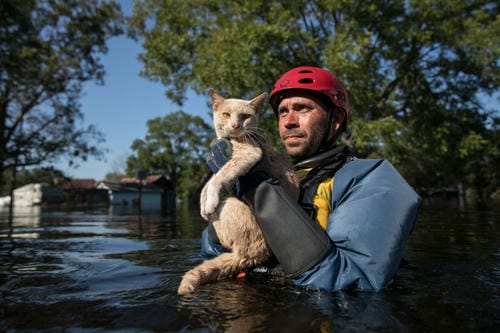
Social bonds are another area where pets provide lessons. Animals often rely on companionship and cooperation for survival, emphasizing the importance of teamwork and community during disasters. Pets also demonstrate effective stress management, quickly shifting from heightened alertness to calm, a strategy humans can adopt to maintain clarity under pressure. Finally, watching how pets adapt to changing circumstances can help humans anticipate environmental risks and make faster, safer decisions.
Preparing for Disasters With Pets
Proper preparation ensures both humans and pets can navigate emergencies safely. Start by creating a plan that includes evacuation routes, shelter options, and contingencies for multiple pets. Assemble an emergency kit that contains food, water, medications, first aid supplies, and identification materials to meet your pets’ needs.
Training pets for evacuation is equally important. Familiarize them with carriers, leashes, or transport methods so that moving them during a crisis is less stressful. Observing pets’ behavior can also serve as an early warning system; agitation or restlessness often signals environmental changes before humans notice them. Integrating pets into drills and routines strengthens both human and animal resilience, making survival a coordinated effort rather than a reactive one.
Pets demonstrate a type of disaster resilience that humans often lack. Their sensory awareness, adaptability, emotional composure, and social cooperation equip them with tools to respond rapidly and effectively to emergencies.
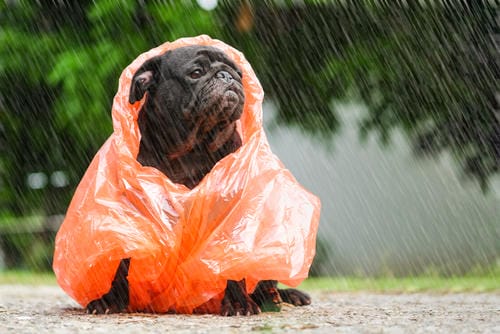
While humans rely on technology, planning, and cognitive strategies, pets rely on evolutionarily honed instincts that often give them an advantage.
By observing and learning from pets, humans can enhance disaster preparedness, reduce panic responses, and implement more intuitive, flexible survival strategies. In many ways, pets remind us that sometimes, instinct and adaptability are more valuable than knowledge and planning alone. Their actions are a testament to the subtle intelligence embedded in nature and a guidepost for human resilience.
(This article is intended for educational purposes and does not substitute professional advice. Pet owners should consult veterinarians or disaster management authorities for personalized guidance on emergency preparedness and pet safety.)
About the Author
Lila Hartwell is an animal behaviorist and seasoned pet columnist with over a decade of experience studying human-animal interactions. Her work has been featured in leading veterinary journals and lifestyle magazines, focusing on how pets respond to stress, environmental changes, and emergencies.
References
[1] Horowitz, A. (2021). Being a dog: Following the dog into a world of smell (2nd ed.). Scribner.
[2] Nakamura, H., & Yamaguchi, T. (2021). Animal responses to natural disasters in Japan: Lessons from recent earthquakes and tsunamis. Disaster Studies Review, 15(2), 45–67.
[3] American Veterinary Medical Association. (2022). Pet disaster preparedness and evacuation guidance.
[4] Australian Government, Department of Agriculture, Water and the Environment. (2021). Bushfire impact on pets and wildlife: Lessons from recent fires.