
Why High-End Pet Care Is Creating Inequality Among Pet Owners?
March 24, 2026
In this Article:
● The rise of high-end pet care has created a tiered system where affluent owners can access premium services while others struggle to afford even basic care.
● Increasing veterinary costs and limited access to effective insurance are major drivers of financial strain and inequality among pet owners.
● The expansion of luxury pet services reinforces social and cultural pressure, framing expensive care as a standard rather than a choice.
● Addressing these inequalities requires systemic solutions, including affordable veterinary access, insurance reform, and a shift away from consumer-driven definitions of responsible pet ownership.

Estimated Reading Time: 8 minutes┃Post by Marina Everly
In recent years, the landscape of pet care has transformed dramatically. Once defined primarily by routine feeding, shelter, and basic veterinary checkups, pet ownership today often encompasses a vast array of premium services, boutique products, and luxury experiences that parallel human lifestyle trends. From gourmet, organic meal plans and breed-specific supplements to pet spas, designer accessories, and high-tech healthcare options, the modern pet care economy has burgeoned into a significant consumer market. Yet this explosion of high-end pet care has also contributed to a growing divide among pet owners—one that mirrors broader patterns of economic inequality and raises important questions about access, well-being, and the very nature of animal companionship in contemporary society.
The Explosion of Premium Pet Care Spending
The pet care industry has expanded into a multibillion-dollar sector, driven by cultural shifts in how people perceive and value their animals. Once primarily companions, pets increasingly hold roles akin to family members, influencing spending behaviors accordingly. In the United States alone, total pet-related expenditures exceeded $147 billion in 2023, with veterinary services, food, grooming, insurance, and other services all growing rapidly in prominence and cost. This spending surge reflects both increased ownership rates and a willingness to invest in comprehensive welfare and wellness services for animals.
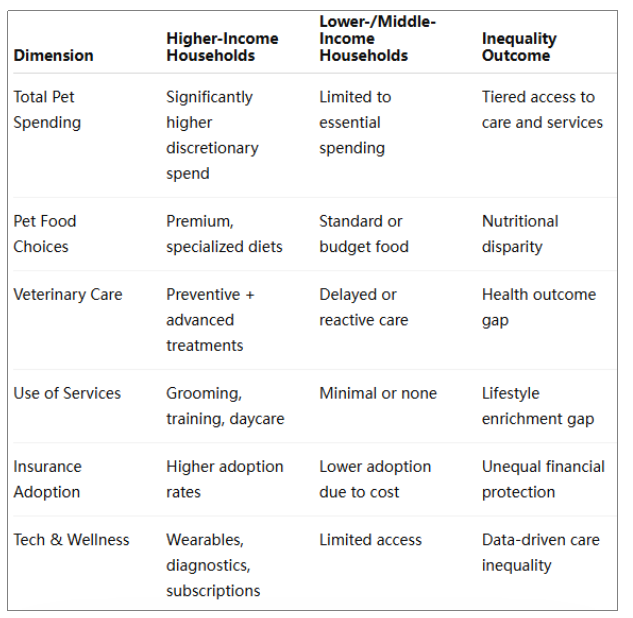
(Table 1- Income-Based Inequality in Pet Care Spending)
Note:
● U.S. pet spending reached $157B+ in 2025, showing overall expansion
● Veterinary care alone accounts for $41B+ annually, making it a major cost driver
● Higher-income households spend 3–4× more on pet food and services
● Cost is the #1 reason owners decline veterinary care
● Veterinary costs are rising much faster than inflation (~9.8% vs 3.2%)
However, this upward trajectory in spending is not uniform across households. Households with higher disposable incomes are far more likely to purchase premium and luxury services, from bespoke meal plans to advanced preventive healthcare and even pet concierge services. Meanwhile, middle- and lower-income households often struggle to keep pace with these escalating expectations and expenses, forcing difficult trade-offs between financial stability and animal care.
The Cost of Care: Veterinary Services and Insurance
Among all categories of pet care, one of the most significant contributors to inequality is the rising cost of veterinary medicine. Advances in veterinary technology, including high-end diagnostics and specialized surgical procedures, have elevated the standard of care but also inflated prices. According to industry reports, millions of Americans face steep costs for routine services, emergency procedures, and chronic illness treatments, with many routine visits costing hundreds of dollars and emergency care easily reaching into the thousands per incident.
While pet insurance theoretically offers a buffer against these costs, adoption remains limited. Many policyholders find premiums prohibitive, coverage restrictions difficult to navigate, or reimbursements delayed, further complicating the promise of financial protection. Insurance plans that attempt to mirror comprehensive human healthcare frequently come with high deductibles and caps that are out of reach for average households.

This financial reality creates stark choices for pet owners: invest in expensive treatments, sacrifice other personal needs, incur debt, or—tragically—forego care when the costs are untenable. For some, the resulting “economic euthanasia” decisions reflect deep emotional and ethical distress, compounding the socioeconomic divide by placing access to basic veterinary care out of reach for less affluent families.
Luxury Services and Lifestyle Commodification
Beyond health services, the pet care ecosystem has expanded into lifestyle and luxury categories that were once niche but are now mainstream. Pet spas, professional photography sessions, high-end fashion accessories, and tailored enrichment experiences are increasingly marketed as essential to proper pet parenting. These services carry a premium price tag, effectively positioning a tiered market where affluent owners can provide holistic enrichment while less wealthy owners must limit their options to essential care alone.
The expansion of premium services has been propelled by marketing narratives emphasizing emotional bonds between owners and pets, where discretionary spending is framed as an expression of love rather than luxury. Yet this mindset contributes to social pressure and expectations around pet ownership that may be untenable for many households. This phenomenon not only strains individual finances but also reinforces social hierarchies: affluent owners are able to showcase their investments in pet well-being and enrichment while others are relegated to basic care.

Economic Inequality and Social Implications
The rise of high-end pet care reflects a broader pattern of consumer premiumization, where culturally elevated treatment options are available primarily to those with financial means. Such stratification has implications for social equity, as the benefits associated with pet ownership—improved mental health, increased social connection, stress relief—become increasingly contingent on financial resources. For households with limited means, the rising cost of pet care may deter ownership, limit access to preventive services, or force difficult choices between human and animal needs.
Data suggests that households with higher income levels spend significantly more on their pets, including both routine and elective services, and are more likely to utilize advanced veterinary care. Lower-income households, on the other hand, are overrepresented among those who delay or skip care due to cost constraints, revealing a gap in access and outcomes that parallels other forms of health inequality.
This divergence also intersects with insurance adoption rates, availability of low-cost community clinics, and geographic disparities in access to care. While nonprofit organizations and subsidized programs exist to partially address affordability gaps, they are often underfunded and unable to meet growing demand, leaving many owners without viable alternatives.
Cultural Pressures and the Human-Pet Bond
Complicating the economic divide are cultural narratives that amplify emotional expectations around pet care. The elevated status of pets as family members can drive owners to pursue costly services and treatments, often at significant personal financial risk. For some, this leads to financial stress, debt accumulation, or prioritization of pet expenses over personal care, as documented in some surveys showing a substantial percentage of owners spending more on pets than on their own health and wellness needs.

These dynamics underscore a psychological dimension to pet care inequality: the interplay between emotional attachment and economic capacity. Owners who feel a moral obligation to provide top-tier care may push themselves beyond their financial limits, while those who cannot afford such care must reconcile feelings of guilt and social judgment with practical constraints.
Addressing inequality in pet care requires a multifaceted approach, encompassing policy intervention, industry reform, and community support. Expanding access to affordable veterinary services through subsidies, sliding-scale clinics, and telehealth platforms could alleviate some barriers to basic care. Increasing transparency and regulation in pet insurance markets may also help reduce financial unpredictability for owners. Investing in preventive care education and affordable wellness programs could further bridge gaps in outcomes for lower-income households.
Moreover, emphasizing values beyond consumerism in pet care—such as preventive health practices, community-supported services, and responsible ownership—can help rebalance the cultural narrative around pets. As the industry evolves, stakeholders from veterinarians to policymakers have a role to play in ensuring that the benefits of pet companionship remain accessible to a broad and diverse population.
The rise of high-end pet care has undeniably elevated standards for animal welfare and created opportunities for innovation and specialized services. Yet it has also crystallized a divide that reflects deeper socioeconomic inequalities. As pet owners navigate an increasingly complex and expensive care landscape, systemic challenges persist for those with limited financial resources. Addressing these inequities will require intentional collaboration, thoughtful policy, and a recommitment to inclusivity in how we define and support the human-animal bond.
(The content of this article is for informational and educational purposes only and does not constitute professional veterinary, financial, or legal advice. Readers should consult qualified professionals for guidance specific to their situation. The author is not responsible for any actions taken based on the information provided here.)
About the Author
Marina Everly is a seasoned pet industry analyst, writer, and advocate with over 15 years of experience examining trends in pet health, wellness, and consumer behavior. She holds a Master’s degree in Animal Science and a certification in veterinary practice management, and her work has appeared in leading publications such as PetCare Professional, Animal Health Today, and The Companion Journal.
References
[1] American Pet Products Association. (2023). Annual Pet Industry Spending Figures.
[2] Packaged Facts. (2025). Pet Owners Spending and Challenges Survey.
[3] U.S. News & World Report. (2026). Pet Ownership and Spending Report.
[4] Washington Post. (2025). Pet Insurance Explained.
[5] Reuters. (2024). Surging Pet Care Costs and Pet Owner Strategies.