Human Values, Pet Data: Personality Matching Studies Reveal Happiness Between Owners and Pets
March 25, 2026
Estimated Reading Time: ~12–15 minutes┃Post by Elara Finch
The idea that humans and their pets share meaningful psychological similarities has long existed in popular culture, but only in recent decades has behavioral science begun to rigorously validate it. What once appeared as anecdotal observations—owners resembling their dogs in temperament or lifestyle—has evolved into a measurable phenomenon grounded in personality theory, comparative psychology, and human–animal interaction research.
Similarity as the Foundation of Human–Pet Bonds
At the core of this research lies the similarity-attraction hypothesis, a foundational concept in psychology suggesting that individuals are more likely to form strong bonds with others who resemble them in personality, attitudes, and values.
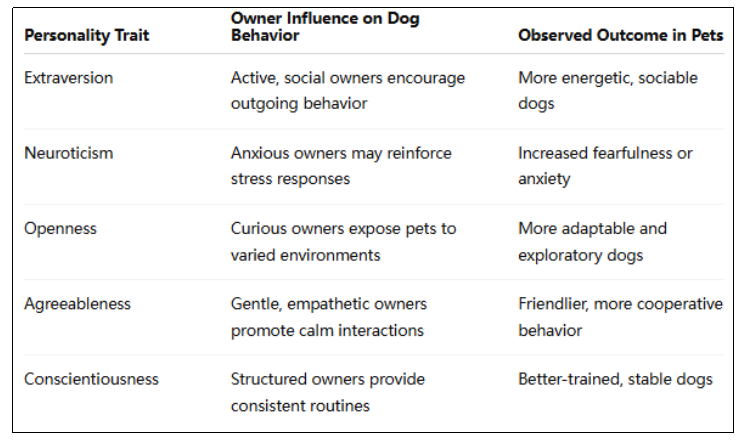
When applied to human–pet relationships, this framework yields striking results. A seminal study in Applied Animal Behaviour Science found significant positive correlations between dog owners and their dogs across all five major personality dimensions, including extraversion, neuroticism, openness, agreeableness, and conscientiousness . Notably, these similarities persisted even when third-party observers assessed the dogs, indicating that the effect is not merely projection or bias.
The implications are substantial. Personality is not just a human construct but a cross-species trait that can be observed, measured, and compared. Dogs, in particular, exhibit stable personality traits influenced by both genetic and environmental factors, similar to humans . This opens the door to examining not only how pets behave, but how they psychologically “fit” with their owners.
Further reinforcing this connection, research has shown that owner personality directly influences canine behavior and behavioral outcomes. For instance, studies have linked owner psychological traits to the prevalence of behavioral issues in dogs, suggesting that the emotional and behavioral environment created by the owner plays a crucial role . In practical terms, an anxious owner may inadvertently reinforce anxious tendencies in their pet, while a calm and structured individual may foster stability.
Beyond personality traits, researchers have expanded their focus to include value systems—the deeper psychological priorities that guide behavior. A 2022 study in Frontiers in Psychology demonstrated that pet owners often attribute human-like values to their animals and that these perceived values follow recognizable psychological structures . More importantly, the study found that greater alignment between owner values and perceived pet values is associated with increased life satisfaction, particularly among dog owners.

This shift from personality to values represents a critical evolution in understanding human–pet relationships. Personality describes how individuals behave, while values explain why they behave that way. When both align between human and animal, the relationship becomes more than compatible—it becomes mutually reinforcing.
Data-Driven Insights and the Emergence of Matching Systems
While early studies relied heavily on surveys and observational methods, modern research increasingly leverages data science, computational modeling, and artificial intelligence to analyze pet-owner relationships at scale. This transition marks a significant turning point, transforming a traditionally qualitative field into one supported by quantitative precision.
Recent advancements in machine learning have enabled researchers to classify and predict canine personality traits with remarkable accuracy. A 2024 study published in Scientific Reports introduced AI models capable of identifying distinct dog personality categories—such as “calm/agreeable” or “anxious/fearful”—with up to 99% accuracy . These models rely on behavioral datasets and pattern recognition, offering a scalable way to assess compatibility between pets and owners.
Such developments are not merely academic. They form the foundation of algorithmic pet matching systems, which aim to optimize the adoption process by aligning human preferences, lifestyles, and psychological profiles with suitable animals. Instead of choosing a pet based on appearance or impulse, prospective owners can be matched with animals whose behavioral tendencies and emotional needs align with their own.
The rationale behind these systems is supported by behavioral research. Studies indicate that well-matched owner–dog pairs exhibit stronger relationships, better communication, and fewer behavioral problems . Compatibility is not just beneficial—it is predictive of long-term success in pet ownership.

Additionally, large-scale data analyses have begun to uncover broader patterns in human–pet interactions. Digital footprints, such as social media activity and wearable pet tracking data, provide new ways to measure emotional well-being and interaction quality. These approaches reveal that pet ownership can correlate with measurable indicators of happiness, although the strength of this effect varies depending on compatibility and context.
The Feedback Loop Between Humans and Pets
One particularly compelling concept emerging from this body of work is the bidirectional feedback loop. Owners influence their pets through training, emotional expression, and daily routines, while pets simultaneously shape owner behavior through companionship, responsiveness, and emotional feedback. Over time, this dynamic can amplify similarities, making the relationship appear more naturally aligned than it initially was.
This raises an important question: are people selecting pets that already resemble them, or are they gradually shaping them into reflections of themselves? Evidence suggests that both processes occur. Initial selection may be influenced by subconscious preferences for similarity, while ongoing interaction reinforces and deepens that alignment.
Happiness, Compatibility, and the Future of Pet Ownership
The ultimate significance of personality and value matching lies in its impact on human well-being. While pet ownership is often assumed to improve happiness universally, research paints a more nuanced picture. The benefits of owning a pet are not guaranteed—they depend heavily on the quality of the match between owner and animal.
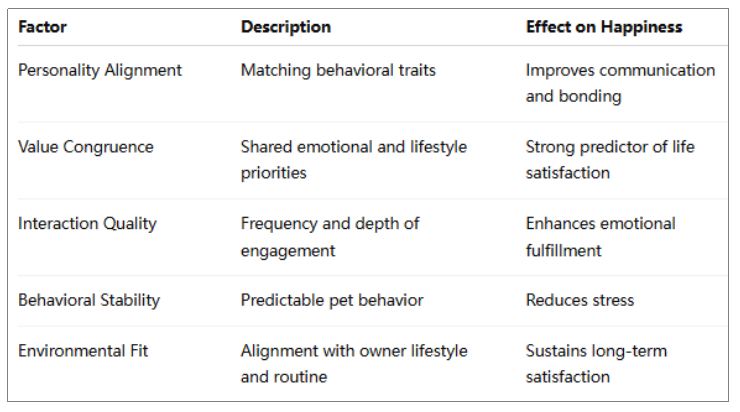
Studies show that value congruence between owners and pets is positively associated with life satisfaction, particularly in relationships involving dogs . This suggests that emotional fulfillment arises not simply from companionship, but from a sense of psychological harmony. When a pet’s behavior aligns with an owner’s expectations, preferences, and emotional needs, the relationship becomes a source of stability and joy.
Conversely, mismatches can lead to stress, frustration, and even the breakdown of the relationship. Behavioral problems in pets are a leading cause of relinquishment to shelters, and these problems are often linked to incompatibility rather than inherent flaws in the animal. In this context, personality matching is not just a matter of convenience—it is a critical factor in animal welfare.
The distinction between different types of pets further underscores the importance of compatibility. Dogs, as highly social animals, tend to mirror their owners more closely and respond strongly to alignment in values and behavior. Cats, on the other hand, are often perceived as more independent, making their compatibility with owners less dependent on similarity and more on tolerance for autonomy.
The Future of Data-Informed Pet Relationships
Looking ahead, the integration of behavioral science and technology is likely to redefine how people approach pet ownership. Future systems may include comprehensive compatibility assessments, combining psychological profiling, lifestyle analysis, and real-time behavioral data. Prospective owners could receive personalized recommendations based on their daily routines, emotional preferences, and long-term expectations.
Wearable devices and smart home technologies may further enhance this process by providing continuous feedback on pet behavior and well-being. These tools could enable dynamic adjustments, helping owners better understand and respond to their pets’ needs. In this sense, the relationship becomes not only data-informed but also continuously optimized.
However, this technological shift also raises ethical considerations. Reducing animals to data points risks oversimplifying their complexity and individuality. While algorithms can guide decision-making, they cannot fully capture the emotional and intuitive aspects of human–animal bonds. A balanced approach is essential—one that combines scientific insight with empathy and personal judgment.
Ultimately, the emerging research on personality matching reveals a fundamental truth: the happiest relationships between humans and pets are built on alignment. Whether through shared traits, complementary values, or adaptive interaction, this alignment creates a sense of mutual understanding that transcends species boundaries.
(This article is intended for informational and educational purposes only. While grounded in current behavioral research, it does not replace professional advice from veterinarians, certified animal behaviorists, or adoption specialists. Individual pet-owner relationships vary widely, and outcomes depend on multiple factors beyond personality and value alignment. Readers should use discretion and seek expert guidance when making pet ownership decisions.)
Source:
[1] https://www.elsevier.com/connect/what-makes-a-good-dog-owner-match-heres-what-science-says
[2] https://pmc.ncbi.nlm.nih.gov/articles/PMC9651006
[3] https://www.sciencedirect.com/science/article/abs/pii/S0168159112001785
Keep the smiles coming—explore more articles filled with pets, tips, and happy moments!